Guide
Solar powered barriers How they work and when to choose one
A solar powered barrier does the job of a mains-wired automatic barrier while making its own electricity. Here is how the technology works, how it copes with British weather and where it makes the most sense.
Dofygate team? Log in to the DOFY.io adminHow a solar powered barrier works
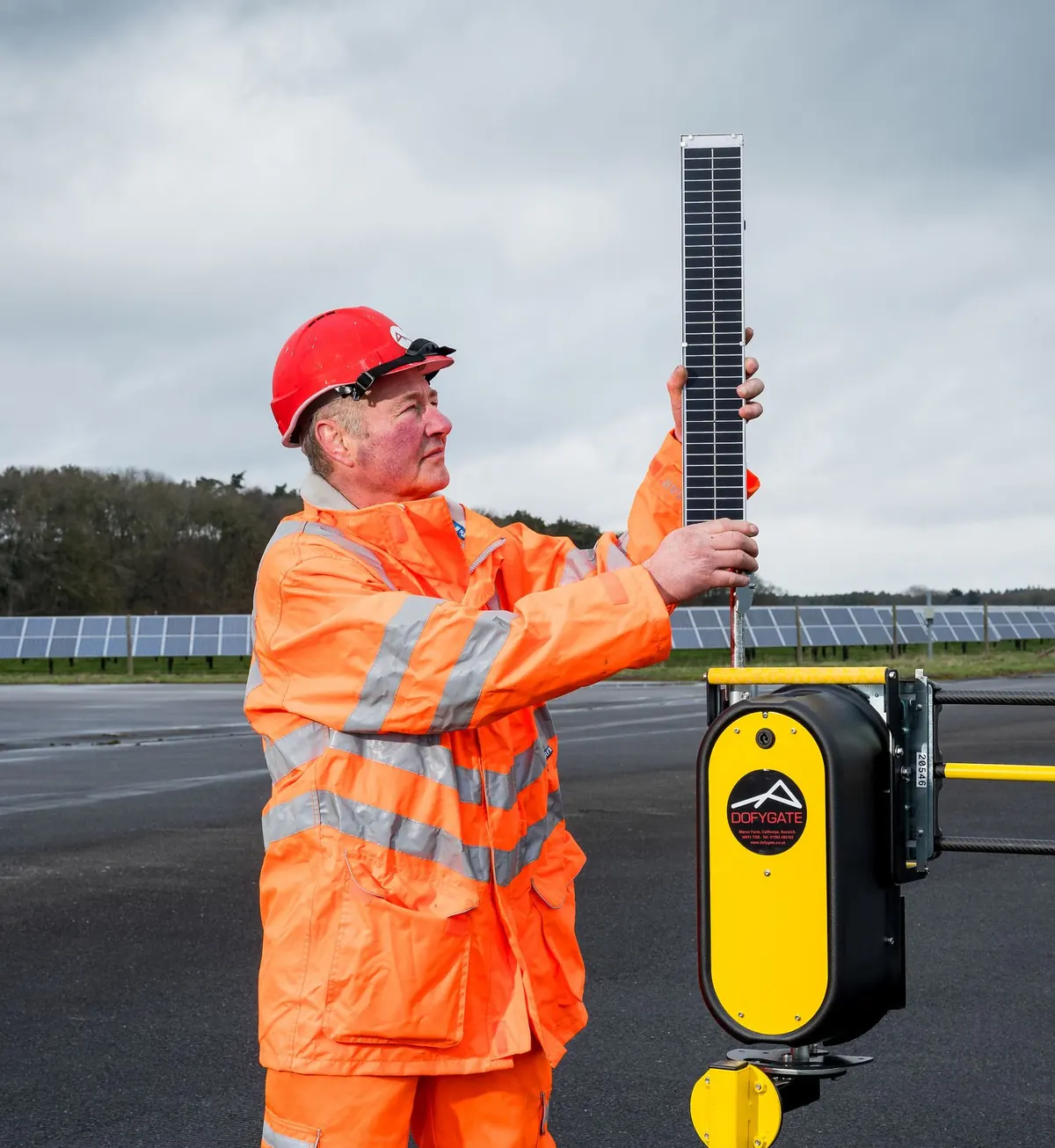
Three parts do the work. A photovoltaic panel turns daylight into electricity. A battery stores it. A motor and controller spend it, raising and lowering the arm whenever a signal arrives from a remote, keypad, intercom or sensor.
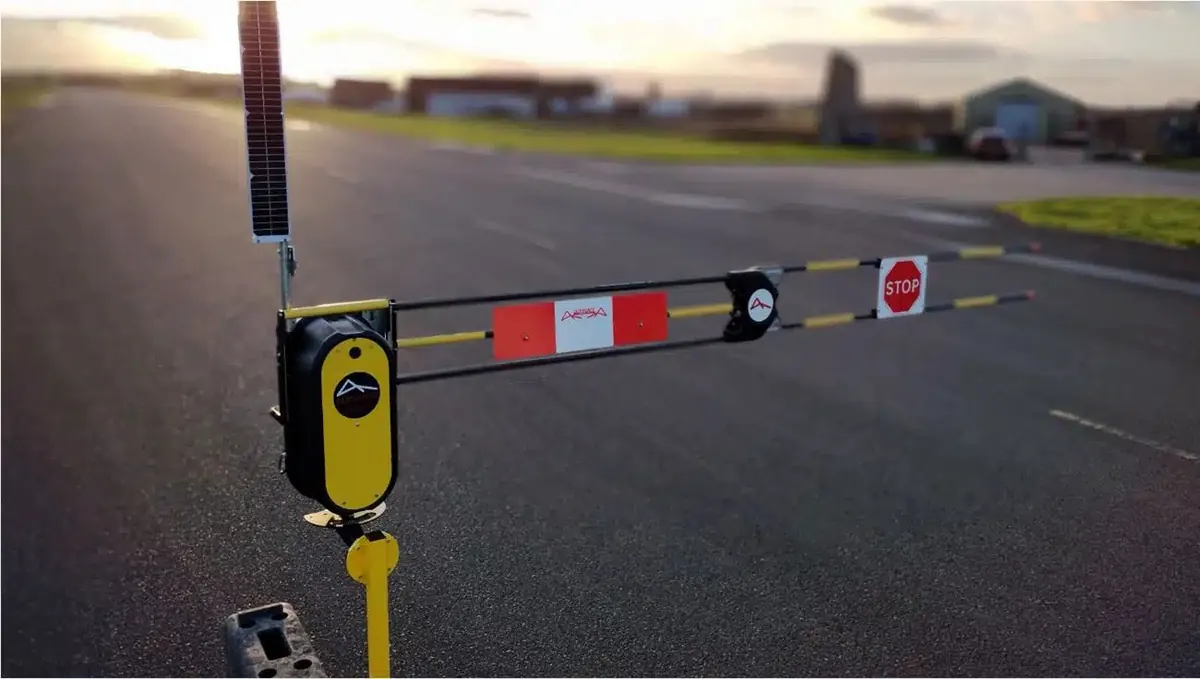
The balance between those three is everything. A barrier that burns a lot of energy per opening needs a big panel and a big battery, which makes it heavy and hard to move. The Dofygate 4 tackles the problem from the other end: its carbon-fibre arm is light and folds as it opens, so each cycle takes very little energy and a compact panel can keep up.
Do solar barriers work in winter?
UK winter days are short and often grey, so it is the right question to ask. Panels still generate in overcast daylight, only less, and what matters is the balance of energy collected against energy used.
On most sites the Dofygate 4 runs on solar alone all year. A very busy entrance in December and January may need the battery topping up around once a month, and a Battery Booster base adds reserve for heavy use and long nights. If an entrance is exceptionally busy, we can also supply a mains-powered version of the same barrier.
Solar or mains-wired: which is better?
| Factor | Solar powered barrier | Mains-wired barrier |
|---|---|---|
| Power supply | Built-in panel and battery | Needs a mains connection at the gate |
| Groundworks | None | Trench, ducting and usually a plinth |
| Installation | Minutes, by your own team | A contractor plus an electrician |
| Relocating | Move it in minutes | Effectively permanent |
| Electricity | Nothing to pay for | Drawn from the site supply |
| Best suited to | Temporary works and entrances that move or lack power | Permanent, very busy entrances with a supply close by |
A mains-wired barrier is still a sound choice for a permanent, very high-traffic entrance where a supply is already to hand. Where it is not, or where the entrance will move during the job, solar usually wins on cost and speed. For a wider comparison, including battery-only and manual barriers, see our guide to automatic traffic barriers.
Where solar powered barriers make sense
- Construction and infrastructure sites, where gates move as the work progresses
- Temporary road closures, bus gates and works access
- Recycling centres, yards and depots with no supply near the entrance
- Farms and rural entrances, including biosecurity points
- Showgrounds, festivals and other events
- Any site where digging a cable trench would be slow, costly or disruptive
Over 1,200 Dofygate barriers are in service across the UK, at sites from Sizewell C to household recycling centres. See who uses them and read the case studies.
Looking after a solar barrier
Keep the panel clean and free of shade, so it collects as much light as it can. If the barrier starts to move slowly or stops short of closing, the battery is usually low; recharge or exchange it before looking for anything else, especially after a long run of dull weather.
A yearly inspection catches wear early and gives you a record for your health and safety file. Find out what is included in our annual barrier servicing.
How long does a solar powered barrier take to set up?
The Dofygate 4 arrives assembled, so it takes minutes: stand it on its base or post bracket, release the arm lock and it is ready to use.
What happens if the battery runs low?
The barrier will start to move more slowly or may not close fully. Recharge or exchange the battery and it will be back to normal; our team can talk you through it.
Can a solar barrier be moved to another entrance?
Yes. On a wheeled base one person can roll it to a new position, and ComboPallet versions move by forklift or pallet truck.
Are solar powered barriers better for the environment?
They run on renewable energy instead of grid electricity and avoid the concrete, ducting and cabling a fixed installation needs.
Is there a mains version if solar is not enough?
Yes. The Dofygate 4 can be built for mains power or to run on battery alone, for sites that need it.
Is solar right for your entrance?
Book a meeting
Pick a 30-minute video or phone call with John Alston, our Commercial Director, at a time that works for you.
Choose a timeSend an enquiry
Tell us about the entrance and the traffic using it, and you will have advice and a price inside a working day.
Start an enquiryJoin the newsletter
Product news, project stories and site safety tips, a handful of times a year.
Sign upQuotes and enquiries
Ask about solar powered barriers
Tell us where the barrier will go and how busy the entrance is, and we will tell you honestly whether solar will cope, with a price, inside a working day.
- Phone us on 01263 493102
- Write to sales@dofygate.co.uk
- Or book a meeting with John at a time to suit you